
In this story
Your grocery cart is not a vision board. Buying twelve aspirational vegetables does not automatically give you twelve evenings free to cook them.
A supermarket can sell you ingredients. So far, it cannot sell you a spare Tuesday. If that changes, please direct us to the family-size pack.
A fictional incident in aisle seven
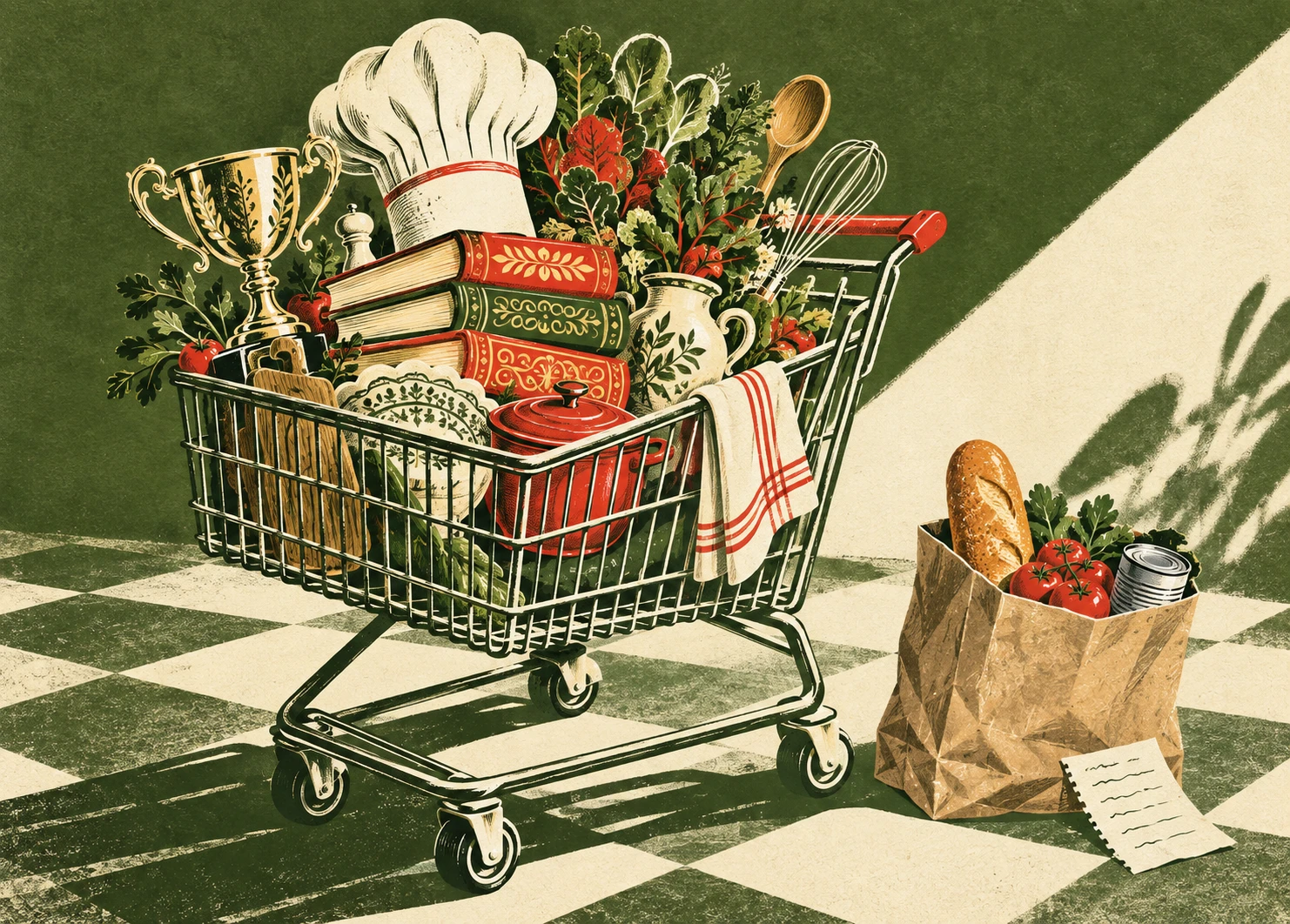
In this entirely fictional scene, Alex enters the supermarket for bread, eggs and dinner ingredients. Twenty minutes later, his cart contains six unfamiliar vegetables, three bags of specialty flour and a cookbook titled, presumably, Who Needs Sleep When You Can Ferment?
“These are for the person I’m becoming,” he explains to the shopping list.
“Lovely,” says the shopping list, which can talk because this is fiction. “Is that person working late on Wednesday too?”
Alex pauses. Somewhere beneath the ambitious produce, the bread waits patiently for a realistic employer.
The issue is not the vegetables. Vegetables are innocent. The issue is shopping for a fictional schedule and expecting your actual week to cooperate.
Start your grocery list with the week you actually have
A realistic grocery list starts before you reach the store. Look at the next few days: which evenings will you be home, which are busy, and when do you actually want to cook?
Pick a few familiar meals that fit those days. A quieter evening might suit a recipe you want to try. A late finish might suit a sandwich, a quick pasta dish or another easy meal you already know how to make.
This is meal planning, not a casting call for a cooking show. Repeating a meal you enjoy is allowed. Nobody is handing out originality points beside the freezer.
Write the meals down, then list what they need. Check how many people you are feeding and how many times you intend to make each meal before deciding quantities. “Looks like a reasonable amount” is how a household of two accidentally acquires enough spinach to landscape a park.
Let your kitchen speak before your cart does
Check the fridge, freezer and cupboard first. You may already own the pasta, rice, beans or sauce your meals need. Put the ingredients you already have beside the meals that will use them, then add only the missing items to your list.
Notice what needs using soon, following the storage and date guidance on its packaging. Choosing a meal around something already in the kitchen can be more useful than buying a completely new set of ingredients.
For your budget, compare unit prices where they are available, but also ask whether you will use the quantity. A bigger pack is not automatically better value for your household if half of it has no job to do.
Give ingredients a job, not an audition
For each new ingredient, ask: What meal is this for, and when am I making it? You do not need a formal presentation. “Tuesday lunch” is a perfectly respectable answer.
An ingredient that works in more than one planned meal can simplify your list. The same bread might serve breakfast and sandwiches; the same tomatoes might go into a salad and a pasta dish. Choose combinations you actually like and that suit your dietary needs.
Fresh, frozen, canned and prepared options can all have practical roles. Compare the price, storage instructions and preparation involved. Convenience is a useful feature when time is short. You do not have to hand-chop every vegetable to qualify as a person who made dinner.
Leave room for food you enjoy, too. Your shopping list does not need to look miserable to prove you took it seriously. We explore that particular performance in Most Diets Aren’t a Lifestyle. They’re Temporary Food Prisons.
Put a backup meal on the list
Choose one easy fallback for the evening when your carefully planned schedule becomes contemporary art. It might be eggs on toast, beans with microwave rice, or a familiar freezer meal. These are everyday examples, not recipes or calorie calculations from a guide.
Check that you have the ingredients and know the preparation and storage instructions. That small decision gives tired-you something concrete to work with.
A simple list can have three headings: meals you plan to make, ingredients you are missing, and your backup option. It does not need color coding, a subscription or an inspirational quote about discipline.
When you want the meal decisions already made
If choosing the meals is the part that keeps holding you up, the 30-Day RESET SYSTEM offers a ready-made starting point: planned breakfasts, lunches, dinners and optional snacks, with short recipes, calorie information and a Smart Grocery Map.
The digital guide also includes three bonus guides. You can inspect the sample pages and the current offer before deciding whether its structure suits your life.
See the meals and grocery guidance inside the RESET SYSTEM. Bring your real schedule. It does not require a fictional chef version of you.
Back in aisle seven, Alex puts two ingredients back and adds the items for a dinner he knows he will cook. The talking list gives no motivational speech. It simply says, “Bread. We still need bread.”
Sometimes a useful plan is wonderfully unimpressive.
Cover: AI-generated editorial illustration of an overambitious shopping cart and a simple grocery bag. It is not a product photograph or a page from the guide.